Minority Mental Health Awareness Month

written by Nathaniel King, Health Education Intern
July is Minority Mental Health Awareness Month
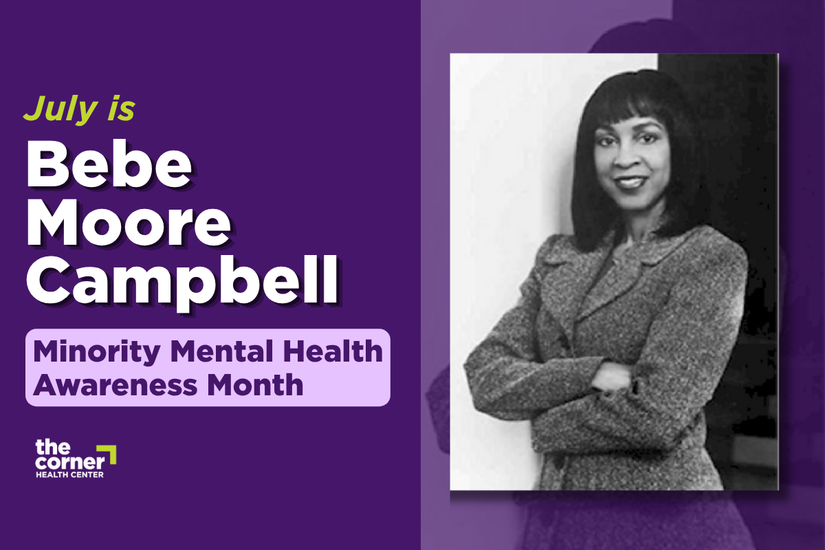
Each July, we recognize Minority Mental Health Awareness Month (MMHAM) to honor the legacy of Bebe Moore Campbell, who was a fearless advocate of better access to and reduced stigma of mental health care for the Black, Indigenous, and People of Color (BIPOC) communities.
Barriers to Mental Health Care
Black, Indigenous, and People of Color (BIPOC) communities experience obstacles at high rates making it hard to receive mental health care, support, and resources. These barriers are connected to racism, discrimination, cultural differences, and historical distrust of the healthcare system.
Common barriers include:
- Lack of provider representation
- Providers who do not understand BIPOC experiences
- Experiences with bias and discrimination in healthcare settings
- Feeling unheard and not taken seriously
- Stigma around mental health within family systems and community
- Limited access to affordable services
These challenges often contribute to higher rates of stress, anxiety, depression, and other mental health concerns.
Mental Health America has curated a collection of comprehensive BIPOC mental health resources (toolkits, tips, worksheets, and screenings) to better take care of yourself and your community. Click here to explore.
At the Corner
Our doctors, therapists, social workers, and staff believe everyone deserves equitable access to quality mental health care, resources, and support. By bringing awareness to the challenges BIPOC communities face, we believe mental health providers, organizations, and policy makers can take steps to ensure equitable access to mental health care is available to all who seek it.
The Corner Health Center Behavioral Health team provides a wide range of behavioral and mental health care services. These include, but are not limited to,
- Behavioral health care for underrepresented racial, ethnic and religious youth and young adults
- Trauma focused care
- Supportive therapy for stress, anxiety, and depression
- Solution focused therapy for a wide variety of emotional health needs
- LGBTQ+ sensitive care
- Substance use support and care
- Psychotherapy for expectant mothers and young mothers,
- Support for individuals who fall on the Autism Spectrum
- Support and help for individuals with ADHD, ADD, and other learning difficulties
- Mindfulness-based approaches, and so much more!
We specialize in 1:1 individual counseling both virtually and in person. We also offer group therapy and support groups for a select number of issues.
Our team is a diverse group of mental health professionals. We have intentionally hired highly qualified therapists who represent the many diverse groups of our patients. This is to ensure BIPOC clients have the representation, understanding, and safety they need to heal and grow.
If you have additional questions or are ready to set up an intake appointment, please contact our behavioral health manager, Jonathan, at (734) 714-2262.
We are here for you.
Learn More About Bebe Moore Campbell Minority Health Awareness Month
Each July, we recognize Minority Mental Health Awareness Month (MMHAM) to honor the legacy of Bebe Moore Campbell, who was a fearless advocate of better access to and reduced stigma of mental health care for the Black, Indigenous, and People of Color (BIPOC) communities.
Barriers to Mental Health Care
Black, Indigenous, and People of Color (BIPOC) communities experience obstacles at high rates making it hard to receive mental health care, support, and resources. These barriers are connected to racism, discrimination, cultural differences, and historical distrust of the healthcare system.
Common barriers include:
- Lack of provider representation
- Providers who do not understand BIPOC experiences
- Experiences with bias and discrimination in healthcare settings
- Feeling unheard and not taken seriously
- Stigma around mental health within family systems and community
- Limited access to affordable services
These challenges often contribute to higher rates of stress, anxiety, depression, and other mental health concerns.
Mental Health America has curated a collection of comprehensive BIPOC mental health resources (toolkits, tips, worksheets, and screenings) to better take care of yourself and your community. Click here to explore.
At the Corner
Our doctors, therapists, social workers, and staff believe everyone deserves equitable access to quality mental health care, resources, and support. By bringing awareness to the challenges BIPOC communities face, we believe mental health providers, organizations, and policy makers can take steps to ensure equitable access to mental health care is available to all who seek it.
The Corner Health Center Behavioral Health team provides a wide range of behavioral and mental health care services. These include, but are not limited to,
- Behavioral health care for underrepresented racial, ethnic and religious youth and young adults
- Trauma focused care
- Supportive therapy for stress, anxiety, and depression
- Solution focused therapy for a wide variety of emotional health needs
- LGBTQ+ sensitive care
- Substance use support and care
- Psychotherapy for expectant mothers and young mothers,
- Support for individuals who fall on the Autism Spectrum
- Support and help for individuals with ADHD, ADD, and other learning difficulties
- Mindfulness-based approaches, and so much more!
We specialize in 1:1 individual counseling both virtually and in person. We also offer group therapy and support groups for a select number of issues.
Our team is a diverse group of mental health professionals. We have intentionally hired highly qualified therapists who represent the many diverse groups of our patients. This is to ensure BIPOC clients have the representation, understanding, and safety they need to heal and grow.
If you have additional questions or are ready to set up an intake appointment, please contact our behavioral health manager, Jonathan, at (734) 714-2262.
We are here for you.


