


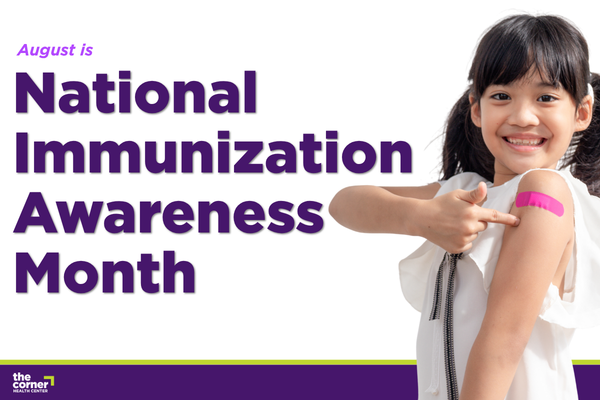
National Immunization Awareness Month

Written by Johanna Orca-Handyside, PA-C
Immunizations, also called vaccinations, are an important part of the health of your child, your family, and your community.
Far from attempting to be a polarizing topic, our discussions about vaccinations are meant to bring us together to provide the best health outcomes for your child– something we all want.
There are many parental concerns about the pediatric vaccination schedule – that it seems excessive, that vaccines may cause significant side effects, or that some vaccine components can be dangerous.
Below we address common vaccination myths and provide further resources to help you feel confident in making the best decision for your child:
FACT: Serious diseases such as polio and measles are rare because widespread vaccinations work. Without vaccines, these diseases may return rapidly and put our most vulnerable at risk.
FACT: Vaccines contain components of or the instructions to make parts of the offending virus or bacteria to stimulate the immune system to fight future infections. While there are different types of vaccines, none of them cause the disease they are meant to protect you from.
FACT: Vaccine ingredients like preservatives and adjuvants are present in small amounts that have been tested for safety. Naturally occurring levels of these components can be higher than what is found in vaccines.
FACT: There is no scientific evidence linking vaccines to autism. This misinformation came from a discredited study. The American Academy of Pediatrics (AAP) emphasize that undermining research on this topic harmful to children’s health.
FACT: Even healthy children can get seriously sick from diseases that are largely vaccine preventable. They can also spread these diseases to others who may be more at risk. Vaccination protects individuals, families, and the community.
FACT: While highly effective, immunity through natural infection has serious health risks like hospitalization and death. Vaccines provide safe protection without those high risks.
There are always exceptions to the rule, and vaccinations are, well, no exception.
- Children who have had a severe allergic reaction (anaphylaxis) to a vaccination or vaccine component should avoid repeat contact with the offending agent.
- Individuals with severely compromised immune systems, like those with cancer or undergoing any type of immunosuppressive therapy, should avoid live attenuated vaccines.
- Vaccines can be safely administered to those with mild acute illness, but those with moderate or severe acute illness should wait until they are healthy prior to receiving a vaccination.
If you are unsure if you are healthy enough to receive your vaccination, discuss this with your healthcare professional.
Egg allergy? No problem!
Vaccines, even those containing small amounts of egg, have been scientifically proven to be safe to give to anyone who has tested positive for egg allergies without any known adverse effects.
Ask us questions!
If your child is due for immunizations or if you are unsure of your child’s vaccination status, stop by the Student Help & Healing Center (Sturgis) or Corner Health Center (Ypsilanti) to schedule an appointment or to determine when your child is due.
While we do recommend following the vaccination schedule as put forth by the American Academy of Pediatrics, the vaccines your child gets is ultimately your choice!
We are here to support and help you make the health choices that you feel are best for your family with no judgement tacked on.
For more information about vaccinations, visit: